
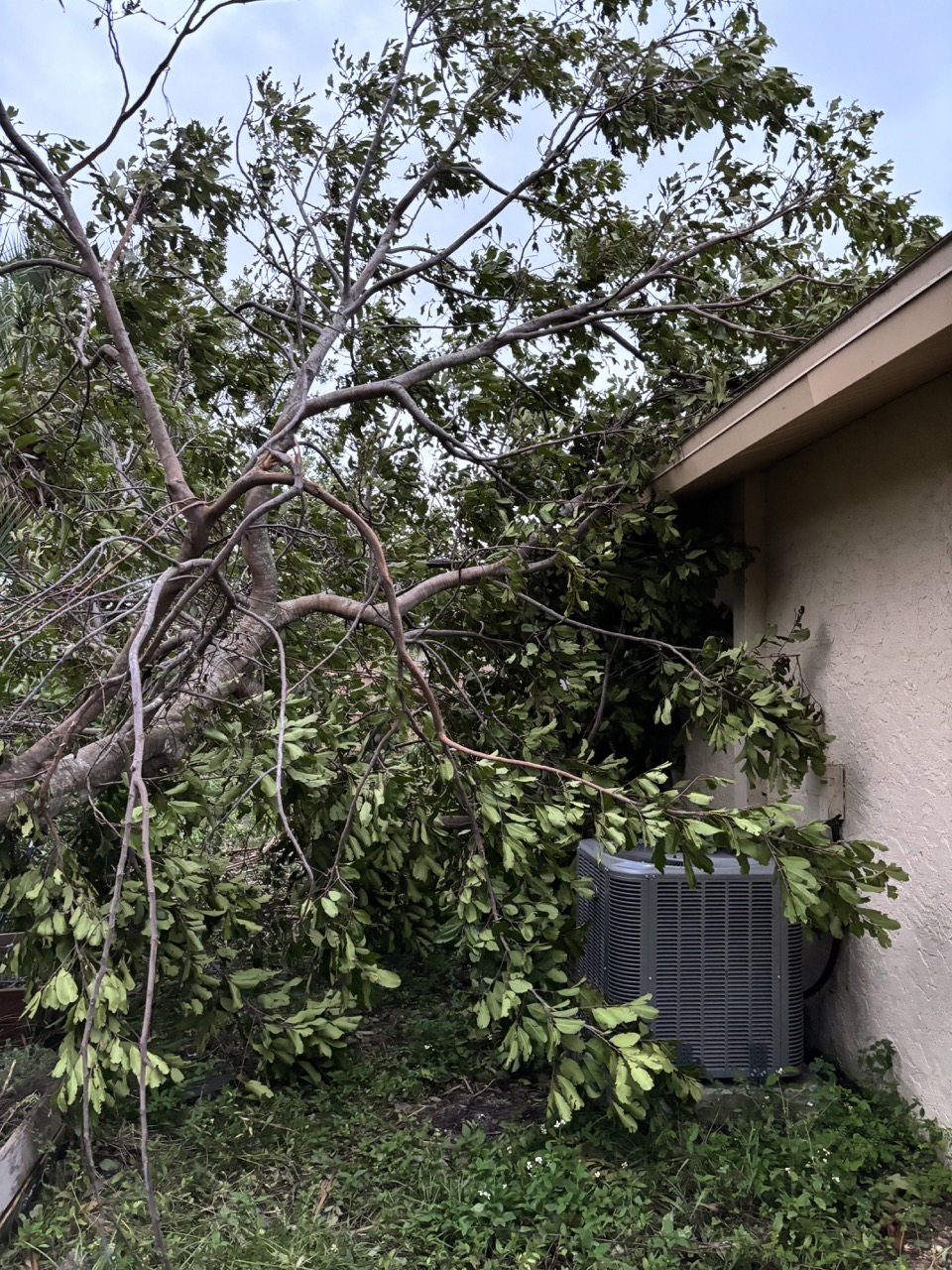
It’s been a rough hurricane season for Sarasota. Earlier this summer we had unexpected terrible flooding from Tropical Storm Debbie, followed by strong winds and high storm surge from being on the periphery of Hurricane Helene’s path, and finally a direct hit by Hurricane Milton only 2 weeks later.
A few years ago I wrote an article about how financial resilience was about more than just what’s in your bank account. How the insurance you buy, the flexibility of your living expenses, your community and network , having diversified income streams, and the social safety net of your state/country all play a role. I thought now would be an appropriate time to revisit this theme from the perspective and financial experience of Hurricane Milton.
I wrote in my last post that I rarely find myself stressing about money now. And that is true, but evacuating our home and not knowing what kind of damage we would be returning to tested the limits of this newfound peace.
The eye of the storm went right over our home, meaning we got the strongest of the winds, but we returned home to a dry interior and minimal damage considering what it could have been. We were lucky.
About 80% of our fence was down, our roof was on, but missing quite a few shingles, and a decent sized tree had fallen and was leaning on the house/roof. We took a big sigh of relief.
That said, even with that luck, this storm will cost us around $20,000 in damage and lost income.
And it could have cost us even more if we didn’t have the kind of holistic financial resilience I talked about in my original post.
We spent close to $1,000 prepping our home for the storm, evacuating, stocking up on supplies for the days with no power, and restocking our two fridges and freezers post multi-day power loss. This could have been much more if we needed to get a hotel instead of being able to stay with my brother on the other coast.
We lost so many shingles that the insurance adjuster recommended that we need 3 of the 4 roof slopes reshingled. Luckily we have the right insurance, and we have enough in our savings to cover the $7,5000 deductible.
Cassie lost at least $5,500 in income due to canceled markets and events, a huge percent of her end-of-the-year income.
My business had to shut down, for the second time in 2 weeks, this time for over a week, resulting in a loss of over $10,000 in sales – which will surely have an impact on my end of year bonus.
Luckily I’m on a salary and have intentionally spent part of this year building out more sales streams that can run even when the warehouse is closed down. Cassie fortunately has other, though smaller, income streams that weren’t affected by the storm.
I’m so grateful we had a free and safe place to evacuate to when mandatory evacuations were called. I’m beyond grateful we had a dry and structurally sound home to come back to. I’m so appreciative that we have friends who are willing to help us chainsaw and remove the tree off our roof. I’m thankful we have jobs that give us the flexibility to take time to prep our home for the storm and deal with the aftermath when we get back. It’s scary to think it could have been so much worse, and it’s heartbreaking to see others in our community who were not spared the feared devastation.
We were lucky, and well positioned to weather the aftermath of the storm. We had built a pretty good foundation of financial resilience. And it was still a lot. It’s still a significant financial hit. It’s scary to think about how even a “good” scenario could have been pretty devastating without the financial foundation and community we’ve built over the past few years.
So, on that note, I encourage you all to revisit my original financial resilience post. Take stock of your current situation, and do one thing this week to strengthen that foundation. Future you just might thank you.
 Butch on a Budget
Leave a comment